Post
Teaching Steel Industry Equipment to See
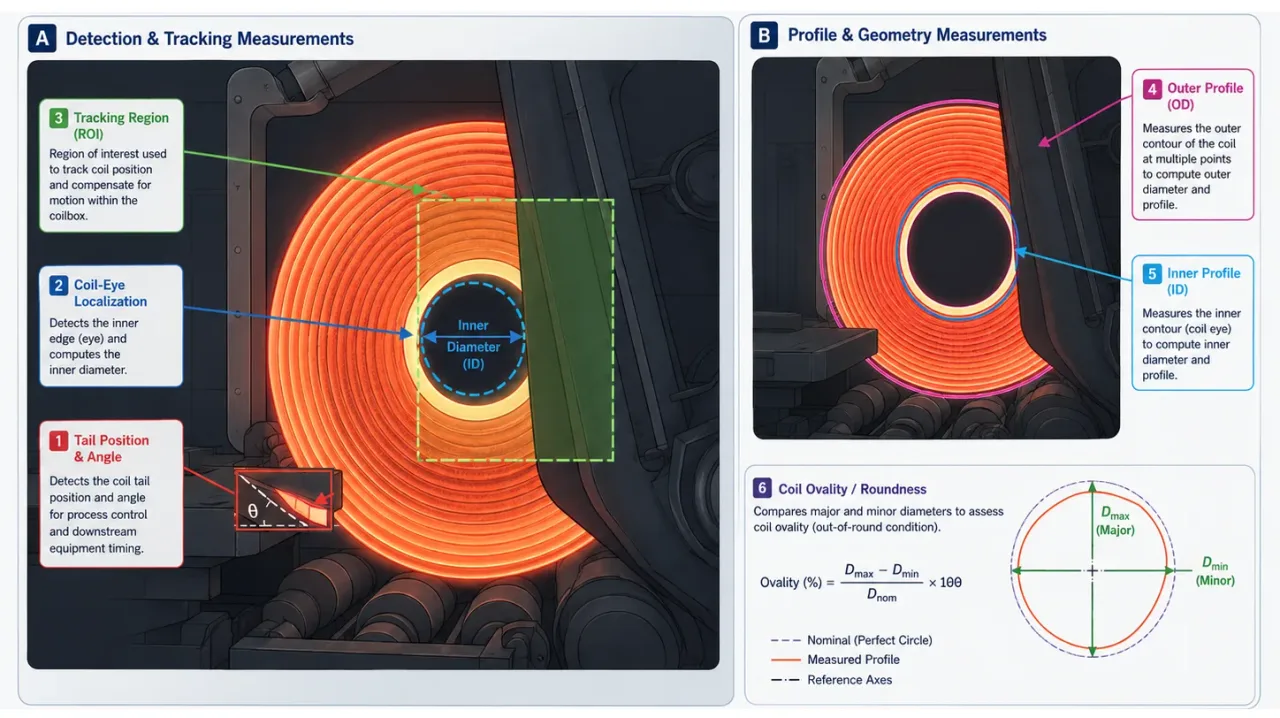
A practical look at how AI, computer vision, and deterministic geometry can work together to turn messy real-world perception into reliable measurements a machine can actually use.
Deep learning for detecting defects in aerospace composite structures
 Ali Maghami
Authors: Maghami, A., Salehi, M., and Khoshdarregi, M.
Journal: CIRP Journal of Manufacturing Science and Technology, 2021
This work explores using computer vision and deep learning to automatically detect defects in drilled composite structures, making quality control faster and more consistent.
Detecting microscopic defects around drilled holes in aerospace composites is time-consuming and inconsistent when done manually. We investigated whether automated vision could improve inspection processes.
We developed a system using multiple light angles to reveal different types of defects, then trained deep learning models to recognize damage patterns and anomalies automatically.
The system achieved high accuracy for defect detection and significantly reduced inspection time compared to manual methods, with validation on real manufacturing samples.
This work demonstrates the potential for automating quality control in precision composite manufacturing, where visual inspection is critical but challenging to automate effectively.